 Custom Paper Bags for Brand Packaging: A Practical Production Checklist
Custom paper bags are more than a way to carry a product. For retailers, gift brands, publishers and event organizers, they can connect packaging, brand presentation and the customer’s overall experience. A successful paper-bag project starts with the right specifications—not simply a logo and a preferred paper finish.
Before requesting a quotation, buyers should confirm the intended use, finished dimensions, paper, handle construction, artwork, finishing and packing requirements. Planning these details together makes it easier to compare quotations and coordinate paper bags with other printed products.
1. Define the Purpose of Your Custom Paper Bags
Start by identifying what the bag needs to carry and where it will be used. A retail shopping bag, a corporate gift bag and a bag designed for books or boxed products may require different dimensions, structures and handle options.
Prepare the approximate dimensions and weight of the intended contents. If the bag will hold a gift box, notebook, book or product bundle, use the actual packed dimensions rather than the nominal dimensions of a single item.
Also clarify whether the project involves one standard size or a family of bags for different products. This information helps establish a practical specification before artwork development begins.
2. Confirm Dimensions and Bag Construction
A complete paper-bag specification should identify the finished width, height and gusset, along with the handle style, bottom construction and any reinforcement requirements.
- Finished dimensions: Confirm the usable internal space required for the intended contents.
- Gusset: Specify the depth needed to accommodate the product or gift set.
- Handles: Define the preferred material, style, length and attachment requirements.
- Base and reinforcement: Confirm the construction needed for the intended load and use.
- Multiple sizes: Record each size, quantity and intended application separately.
Do not assume that one artwork layout will work equally well across every bag size. Logo placement, proportions, folds and handle positions should be reviewed for each format.
3. Choose Paper, Printing and Finishing Together
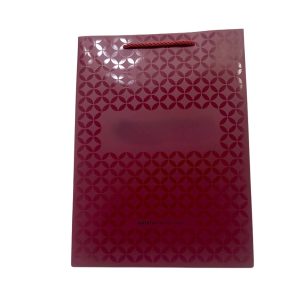
Paper selection should reflect the intended contents, appearance and handling conditions. Buyers may compare coated and uncoated papers, surface texture, print appearance and the stiffness required for the planned construction.
Printing and decorative options may include full-colour printing, lamination, foil effects, embossing or other finishes, depending on the project specification. The most suitable combination should be assessed as a complete product rather than as a collection of isolated upgrades.
If accurate brand colours or a particular surface effect are important, provide reference samples or an approved visual standard. Confirm the relevant production details before final approval.
For a coordinated packaging programme, consider how the bag will look alongside related items such as collapsible rigid boxes, notebooks, books, cards or printed inserts. Shared artwork references can help maintain a consistent presentation, while each component still requires its own specification and approval.
4. Prepare Artwork for the Actual Bag Structure
Before production, prepare the logo, print-ready artwork, colour references and required text. Confirm the printable area and safe zones, and check that important design elements remain clear of folds, gussets, seams and handle attachments.
For projects involving several sizes or versions, maintain a clear file-naming and revision system. Record which artwork has been approved and which layouts need updating when a design change affects more than one format.
Agree who has final artwork approval authority. Keeping comments, approved files and revisions together helps reduce confusion between current and superseded artwork.
5. Plan Packing and Delivery Before Final Approval
Paper bags may be packed flat, grouped by size or delivered as part of a larger retail or gift-packaging programme. These choices affect packing arrangements, carton planning and coordination with other printed products.
If the bag will accompany a box, notebook, book or other product, list all components in the project brief. Confirm whether items need to be packed separately, bundled by set, labelled by size or coordinated for a particular delivery sequence.
Delivery requirements should be discussed alongside the product specification. The final packing method, shipment arrangement and delivery schedule must be confirmed for the actual order rather than assumed at the quotation stage.
6. Use Clear Production and Approval Checkpoints
A practical approval sequence can include specification confirmation, artwork preflight, a structural sample or dummy where appropriate, review of print and finishing, and confirmation of packing details.
The exact sequence depends on the product and project requirements. Before production approval, ensure that the confirmed dimensions, paper, handle construction, artwork version and finishing instructions are recorded consistently.
If a sample is approved, document what it represents and identify any differences that remain between the sample and the final production specification.
7. Compare Custom Paper Bag Quotations Fairly
When comparing suppliers, check that each quotation is based on equivalent specifications. Differences in paper, dimensions, handles, printing coverage, finishing, packing assumptions or order quantities can make unit prices misleading.
Ask suppliers to distinguish required features from optional upgrades. For a project that combines paper bags, gift boxes, notebooks or books, request a clear breakdown of the main products and related components where practical.
A useful supplier review should consider specification control, communication, sample approval and coordination—not price alone. The objective is to compare workable production solutions on a consistent basis.
8. Custom Paper Bags: Checklist Before Requesting a Quote
Use this checklist to prepare a more complete project brief:
- Intended use and representative product contents.
- Finished width, height and gusset.
- Paper requirements and preferred appearance.
- Handle style and construction requirements.
- Printing coverage, colours and finishing options.
- Artwork files, reference images and approval requirements.
- Number of sizes, designs and versions.
- Estimated quantity for each size or version.
- Related boxes, books, inserts or other packaging components.
- Sample requirements, packing instructions and target delivery date.
Providing these details early helps identify missing information and makes it easier to compare quotations against the same project requirements.
9. Working with a Coordinated Paper-Product Manufacturer
When paper bags are part of a broader printed-product programme, it can be useful to review the bag alongside the other products and packaging components. This approach helps buyers organize specifications, artwork references and approval responsibilities across the project.
QYC Print works with printed paper products and paper packaging. Buyers planning a multi-product programme can review the QYC Print project portfolio for relevant product directions and discuss the requirements of their own project.
Every project should be assessed against its actual materials, construction, finishing, quantity, sampling and delivery requirements. Production feasibility and timing should be confirmed before an order commitment is made.
Frequently Asked Questions
What information is needed for a custom paper bag quotation?
Start with the finished dimensions, gusset, intended contents, paper, handle requirements, printing and finishing choices, quantities by size, artwork status and delivery requirements. Reference images or product samples can help clarify the intended result.
Can paper bags be coordinated with gift boxes and other printed products?
Yes, they can be planned as part of a coordinated paper-product programme. Each item should still have its own specification, artwork review and approval requirements.
Should artwork be finalized before the bag dimensions are confirmed?
Confirm the bag structure and finished dimensions before approving the final artwork layout. This helps ensure that logos, text and other design elements fit the actual printable areas and avoid folds or handle attachments.
Plan Your Next Paper-Bag Project
A clear brief is the foundation of a well-coordinated custom paper bag project. Confirm the intended use, dimensions, paper, handles, artwork, finishing, packing and delivery requirements before requesting a quotation.
For a project involving several printed products or packaging components, organize the complete product list and approval requirements at the beginning. This gives the production team a clearer basis for reviewing the specification and identifying the information still needed.