Planning a 2027 Calendar and Planner Collection: A Print Production Checklist
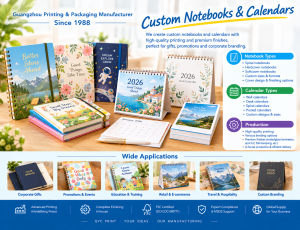
A calendar or planner may look like a single printed item, but a successful seasonal collection often involves several connected decisions: page layout, paper selection, cover construction, binding, finishing, packaging and delivery planning. For brands preparing products for 2027, reviewing these decisions early can make production easier to coordinate and help prevent avoidable changes late in the project.
For stationery brands, publishers, corporate-gift buyers and product developers, the most useful starting point is not simply choosing a calendar format. It is defining the full product family and the way each item will be used.
Start with the Product Family, Not Just One SKU
A seasonal paper collection may include desk calendars, wall calendars, dated planners, diaries, notebooks, notepads, inserts, gift sleeves or a presentation box. Not every programme needs all these components, but reviewing them together can reveal opportunities to keep the visual system consistent across multiple products.
Before requesting a production quotation, prepare a simple SKU list. For each item, identify the finished size, approximate page count, intended use, binding style, cover type, special finishes and whether it will be sold alone or as part of a gift set. If several products share artwork, paper specifications or packaging, note those relationships clearly.
A multi-product brief also makes it easier to separate fixed requirements from optional upgrades. For example, a brand may require a particular page layout and binding style while treating foil stamping, a belly band or a gift box as optional elements to evaluate separately.
Confirm Calendar and Planner Specifications Early
Dated products need careful content control. Confirm the calendar period, language, week-start convention, holidays, date format and any market-specific information before artwork is released. Planners may also need dedicated sections for goals, notes, schedules, trackers or other recurring page templates.
Create a version-controlled content file and identify who is responsible for approving it. When multiple SKUs share a date grid or design system, record which elements are common and which differ by format or market. A late correction to a shared calendar element can affect more than one item, so approval responsibility should be clear.
The production brief should also distinguish between the number of printed pages and the finished product’s physical construction. Include a dummy, pagination map or marked-up layout when the binding or folding structure is not obvious from the page count alone.
For businesses planning a calendar range, explore our custom calendar printing solutions when defining formats and production requirements.
Choose Materials, Binding and Finishing for the Intended Use
Paper weight and surface influence how a calendar feels, how clearly small text prints and how well pages turn or stand. The best specification depends on the format and purpose: a desk calendar, a wall calendar and a portable diary do not necessarily need the same paper or construction.
Paper and Cover Construction
Cover boards, coated or uncoated papers, and different cover constructions should be considered as part of the design rather than after the artwork is complete. The selected materials should support the product’s intended use, appearance and budget.
Binding and Structural Components
Wire-O and other binding styles, sewn or glued book blocks, easel supports and hanging provisions should be included in the specification. If the product includes a stand, pocket, divider, insert or other paper component, show it clearly in the product brief.
Special Finishes
Foil stamping, embossing, debossing, lamination and spot effects can help establish a premium appearance. Select finishes with the artwork, material and budget in mind. Where the finish is important to the final result, include a reference sample or an approved specification in the project file.
Plan Packaging and Presentation Alongside the Printed Item
A calendar or planner may be packed individually, grouped with a notebook, or presented as a corporate gift set. These choices affect the finished dimensions, protection requirements, packing sequence and carton planning.
If a box, sleeve, belly band, paper insert or printed bag is part of the programme, include it in the initial product map. Confirm whether packaging needs to accommodate several SKUs, a gift message, a promotional insert or a market-specific label. The packaging should protect the item while fitting the intended retail or gifting experience.
For premium seasonal collections, collapsible rigid boxes may be considered when the project requires structured presentation. For retail distribution, events or corporate gifting, custom paper bags can complement the printed collection.
For projects with multiple components, request that the quotation distinguish the main product from optional packaging and finishing. This makes it easier to compare alternative configurations without losing sight of the complete project.
Build Approval Checkpoints into the Production Plan
A clear approval sequence can reduce uncertainty. Depending on the project, checkpoints may include final content approval, artwork preflight, colour reference approval, a structural dummy, a finished sample and confirmation of packing details. The appropriate sequence should be agreed with the production team for the actual specification.
Before mass production, make sure the approved version is identifiable. Keep the final artwork, approved material and finishing notes, sample comments and change log together. If a revision occurs, record what changed and whether it affects every SKU or only one item.
Seasonal projects also need a realistic schedule for content approval, sampling, production, packing and transportation. Work backwards from the required in-market date and confirm the assumptions with each responsible party rather than relying on a generic lead-time estimate.
Evaluate Suppliers on Coordination as Well as Unit Price
For a multi-item calendar or planner collection, the lowest unit price does not always describe the full project cost. Buyers should compare equivalent specifications and clarify what is included: paper and board, printing, binding, special finishes, packaging, sampling, quality checks and delivery arrangements.
It is also useful to understand how a supplier manages version control, colour consistency, quality concerns, packaging coordination and changes across several related SKUs. Where supplier qualification requirements apply, confirm them directly and document the evidence instead of assuming that a capability or certification is available.
A concise request-for-quotation package should include the product list, technical specifications, artwork status, quantity assumptions, packaging requirements, target dates and any qualification documents required by the buyer.
Checklist Before Requesting a Printing Quote
Before sending a calendar or planner project for quotation, confirm that you have prepared the following information:
- A SKU list showing each product and its role in the collection.
- Finished dimensions, page counts and binding or construction details.
- Approved calendar data, language and content responsibility.
- Paper, cover, board and finishing requirements.
- Packaging and any inserts, sleeves or gift-set components.
- Quantity assumptions for each SKU and any expected variants.
- Artwork, sample and approval checkpoints.
- Target in-market date and delivery assumptions.
- Supplier qualification and documentation requirements.
- A clear distinction between required specifications and optional upgrades.
The earlier these points are defined, the easier it becomes to evaluate alternative constructions and coordinate the products as one programme.
Planning Your Next Calendar or Planner Collection
QYC Print works with printed paper products including calendars, notebooks, books and paper packaging. For brands planning a 2027 calendar, planner or corporate-gift programme, a coordinated brief can help connect the main printed item with its supporting components and presentation packaging.
Explore the QYC Print project portfolio to learn more about our broader printing and packaging work.
Share the intended product formats, specifications, quantity assumptions and target schedule to begin a project review. Final production feasibility, materials, sampling, compliance documents and timing should be confirmed against the actual project requirements.
QYC Print — Printing and Packaging Solutions for Your Paper Products.