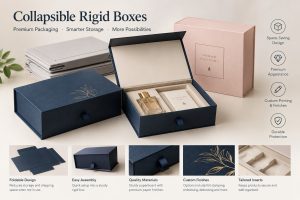
Collapsible rigid boxes offer brands a way to combine the premium appearance of rigid packaging with a structure that can be folded for storage and shipping. They are worth considering for gift collections, beauty and fragrance products, retail merchandise, promotional kits, and other products that need a well-presented paper-based package.
However, a successful packaging project involves more than choosing a box style. Dimensions, board construction, wrapping paper, printing, finishing, inserts, assembly, and shipping requirements all need to work together. This guide explains the key decisions to make before requesting a quotation for custom collapsible rigid boxes.
What Are Collapsible Rigid Boxes?
Collapsible rigid boxes are made with rigid paperboard panels and a folding construction that allows the box to be stored in a flatter form before use. Depending on the design, the panels can be assembled into a firm, structured box for product presentation.
Compared with conventional rigid boxes that remain assembled, a collapsible design may help reduce the space required for storing and transporting empty boxes. The actual space savings depend on the box dimensions, folding structure, packing method, and shipment configuration.
For brands comparing different packaging structures, explore our collapsible rigid box packaging options if this page is available on your site. Choose the structure according to the product, presentation requirements, and intended packing process.
Where Can Collapsible Rigid Boxes Be Used?
Gift and Promotional Packaging
Collapsible rigid boxes can be used for corporate gifts, seasonal gift sets, brand merchandise, and promotional collections. Printed sleeves, paper inserts, cards, and booklets can be planned as part of the overall presentation.
When a project includes several printed components, it is useful to coordinate the box with the related paper products from the beginning. This helps keep the artwork, dimensions, and finishing requirements aligned across the set.
Beauty and Fragrance Packaging
Beauty and fragrance brands may use premium paper packaging for gift collections, launch kits, limited editions, and presentation sets. The box structure and insert should be developed around the actual product dimensions and protection requirements.
If the package contains glass bottles, multiple products, or delicate components, provide the product dimensions and a description of how the items should be held in place. The insert design and packing method should be reviewed together rather than treated as separate decisions.
Retail Products and Brand Collections
For retail products and branded collections, the packaging can be designed to support a consistent visual identity across different product sizes or related SKUs. The artwork, logo placement, paper selection, and decorative finishes should be evaluated against the intended customer experience and production requirements.
Key Specifications to Confirm Before Ordering
1. Finished Dimensions and Box Structure
Start with the finished internal and external dimensions, along with the product size and weight. Confirm the box style, opening method, folding panels, closure, and any special structural requirements.
If the box will hold several products, provide the dimensions of each item and indicate its position inside the package. A product drawing, sample, or clear reference photographs can help the packaging team understand the intended structure.
2. Paperboard and Outer Wrapping
The paperboard and outer wrapping material affect the appearance, stiffness, surface, and overall construction of the box. The appropriate specification depends on the box size, intended contents, finishing requirements, and expected handling conditions.
Rather than choosing a material based on appearance alone, discuss the intended use and required presentation standard with the manufacturer. Where a specific paper, texture, or colour is important, provide a physical sample or an approved reference.
3. Printing and Decorative Finishes
Depending on the design and material, options may include colour printing, lamination, foil stamping, embossing, debossing, or other decorative treatments. The suitability of each finish should be confirmed for the selected surface and construction.
For colour-sensitive projects, share the artwork and colour references early. If the packaging needs to match books, cards, sleeves, or other printed components, specify which colours and visual elements must remain consistent across the complete set.
4. Inserts and Product Protection
An insert can help position products and create a more organized presentation. Possible options depend on the product shape, weight, fragility, and the materials appropriate for the project.
Provide product dimensions and explain whether the insert needs to hold one item, several items, or a combination of products and printed materials. For fragile products, confirm the required level of support and protection with the packaging team before finalizing the design.
5. Assembly, Packing, and Shipping
Because collapsible rigid boxes are designed to fold, the intended assembly and packing process should be considered during development. Confirm how the boxes will be delivered, who will assemble them, and whether the products will be packed before or after assembly.
Share the destination country, estimated order quantity, and any relevant carton or shipping requirements when requesting a quotation. These details help the manufacturer assess the project more accurately.
Collapsible Rigid Boxes vs. Conventional Rigid Boxes
Both packaging types can provide a structured, premium presentation, but they serve different logistical needs.
- Collapsible rigid boxes: May reduce the storage space required for empty boxes, depending on the design and packing configuration.
- Conventional rigid boxes: Remain assembled and may be preferable when the established packing process or presentation format requires a ready-made box.
- Both options: Require the right dimensions, board specification, outer material, finishing, and insert design for the intended product.
The best choice depends on the product, presentation expectations, storage space, assembly process, order quantity, and shipping arrangements. Requesting a structure review before production can help identify the most suitable option.
What to Include in a Quotation Request
To help a manufacturer evaluate a custom collapsible rigid box project, prepare the following information where available:
- Product name and intended application
- Finished box dimensions and preferred structure
- Product dimensions, weight, and number of items per box
- Estimated order quantity and number of designs or SKUs
- Paperboard, outer wrapping, printing, and finishing preferences
- Insert requirements and product-protection considerations
- Artwork files, structural drawings, samples, or reference images
- Target delivery date and shipping destination
If some specifications are not yet finalized, a brief project description and reference images can be a useful starting point. The structure and production details can then be discussed as the project develops.
Working with a Printing and Packaging Manufacturer
When selecting a manufacturing partner, look beyond the appearance of a sample. Consider whether the supplier can review the complete specification, coordinate printing and finishing requirements, and communicate clearly about the project from artwork preparation through production and packing.
For projects combining packaging with printed materials, it may also be useful to review book printing solutions or the manufacturer’s broader printing and packaging project examples, where those pages are available and relevant to your requirements.
QYC Print works with paper printing and packaging projects. For a potential custom box project, share your product details, quantity, artwork status, finishing preferences, and delivery destination so the requirements can be reviewed.
Contact QYC Print to discuss your project and provide the information needed for an initial review.