How to Turn Creative Ideas into Custom Paper Products: A Manufacturing Guide for Brands
A great product often starts with an idea: an illustrated story, an educational method, a new game, a collection of artwork or a creative brand concept. But transforming that idea into a physical product requires more than printing a design.
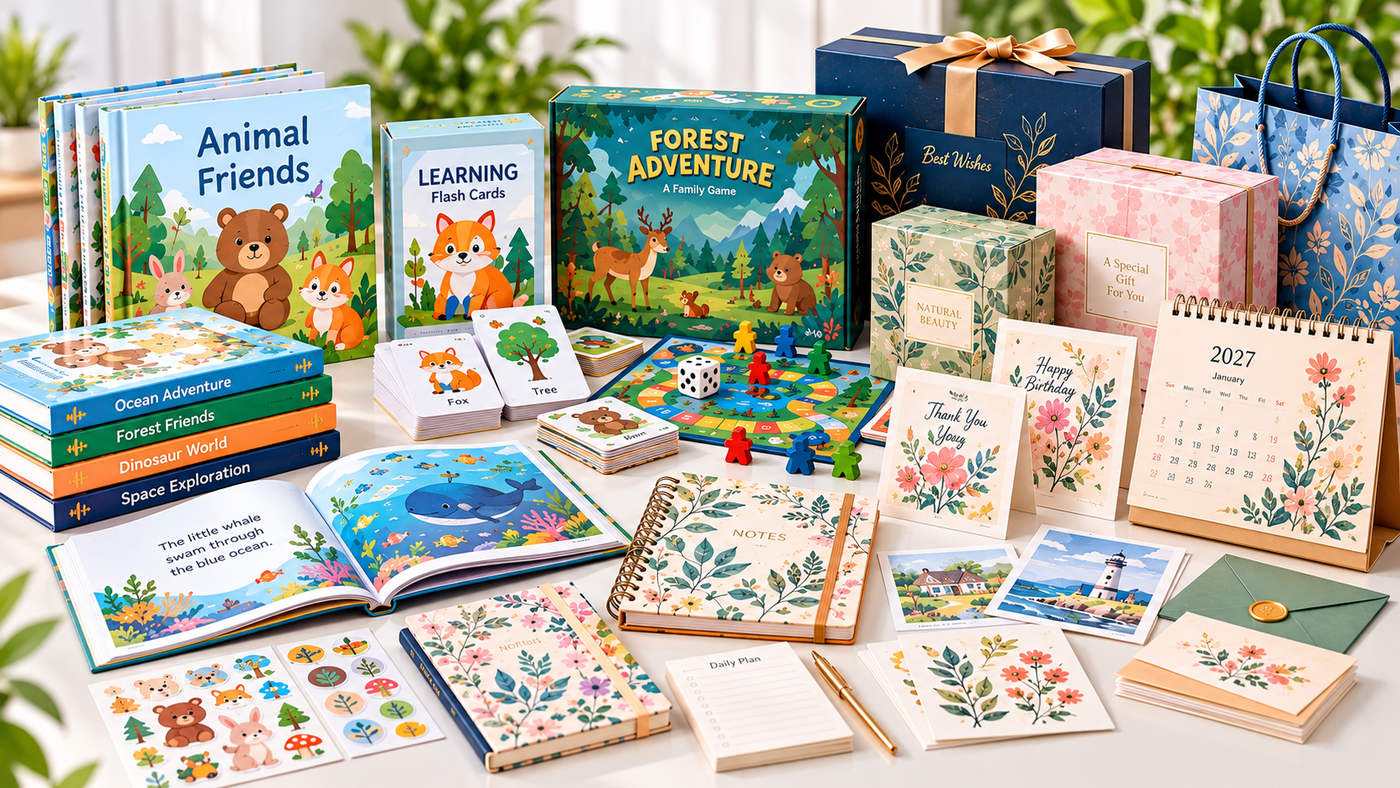
For brands, creators and product developers, custom paper products offer a practical way to turn original content into products customers can hold, use, collect and purchase. Books, flashcards, greeting cards, postcards, desk calendars, board games and gift sets can all become part of a distinctive product collection.
This guide explores how to plan paper-based products, select the right components and prepare a project for manufacturing.
1. Start with the Content, Customer and Product Purpose
Before selecting paper or packaging, define what the product is intended to achieve. Is it designed to educate children, entertain players, showcase artwork, help customers organize their daily lives or become a gift?
A children’s learning brand may transform a teaching method into flashcards and activity books. An illustrator may develop greeting cards, postcards and decorative desk calendars. A game designer may need cards, a game board, printed instructions and a retail box.
Understanding the target customer, usage scenario and product purpose helps determine which physical format makes the most sense.
2. Choose the Right Type of Custom Paper Product
Different creative ideas require different manufacturing structures. Common categories of custom paper products include:
Books and Printed Content
Picture books, children’s board books, activity books, journals, workbooks and illustrated hardcover books are suitable for stories, educational content and long-form creative projects.
Explore our real book printing projects to see examples of physical book production.
Educational Cards and Learning Kits
Flashcards, prompt cards, teaching cards, stickers and workbooks can be developed as individual products or combined into educational kits.
For multi-part products, consider card dimensions, material thickness, durability, printed instructions and storage packaging from the beginning.
Board Games and Interactive Products
Board games may combine playing cards, printed boards, punch-out paperboard pieces, score sheets, rulebooks and boxes. Each component must be designed to work with the others.
Learn more about custom printed paper components and how they fit into complete products.
Creative Stationery, Greeting Cards and Postcards
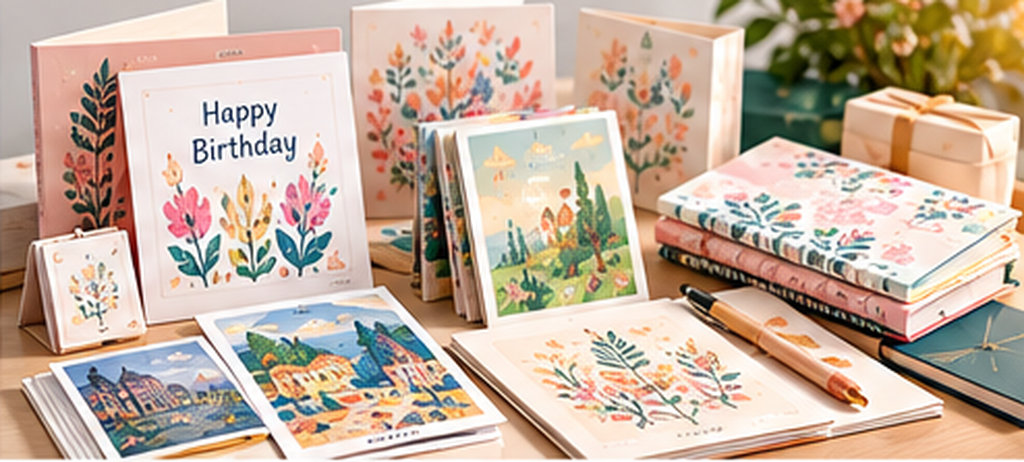
Greeting cards, illustrated postcards, art cards, envelopes, notebooks and stationery gift sets are particularly relevant to artists, designers, cultural brands and e-commerce businesses.
These products can be developed around seasonal themes, original artwork, licensed content or coordinated collections. A single illustration series may become postcards, greeting cards, notebooks and a gift-boxed stationery set.
Desk Calendars and Decorative Paper Products
Desk calendars, calendar cards, planners and decorative paper accessories combine everyday functionality with design. They can also support seasonal collections and branded gift programs.
For calendar projects, artwork, page structure, binding or display support, packaging and accurate date layouts must all be confirmed before production.
Custom Packaging and Gift Presentation
Packaging is part of the product experience. Rigid boxes, collapsible gift boxes, folding cartons, paper bags and printed inserts can help present and protect a finished product.
View our real packaging projects for manufacturing examples.
3. Break the Product into Manufacturing Components
One of the most useful steps in custom paper product development is creating a component list.
For example, a branded educational activity kit may contain a workbook, 40 flashcards, two sticker sheets, die-cut paperboard pieces, an instruction leaflet and a printed gift box.
Each component may require different paper specifications, dimensions, printing methods and finishing processes. Reviewing the complete product structure early helps identify potential manufacturing issues.
The same approach applies to board games, stationery collections, creative gift sets and other multi-component products.
4. Select Materials and Finishing Based on Product Use
Paper weight, paperboard thickness, surface coating, folding construction and binding methods affect both appearance and function.
A greeting card may require a different material and fold structure from a postcard. A children’s board book needs different physical characteristics from a standard paperback. A retail gift box requires a structure suited to the product dimensions and packing method.
Possible manufacturing processes include offset printing, lamination, die cutting, folding, binding and other post-press operations, depending on the specifications.
Special materials, interactive mechanisms and unusual structures should be evaluated through technical review and sampling before bulk production.
5. Design Packaging Together with the Product
Packaging should not always be treated as a last-minute addition. It affects component dimensions, presentation, shipping protection and the customer experience.
A card deck may need a tuck box or rigid box. A multi-component learning kit may need a custom insert or partition. A stationery gift collection may require coordinated packaging that holds cards, envelopes and a notebook securely.
Considering packaging early helps ensure that all components fit together as intended.
6. Prepare a Clear Manufacturing Brief
When contacting a custom paper product manufacturer, a detailed brief makes the initial discussion more productive.
Useful information includes the product type, finished dimensions, component list, expected quantity, preferred materials, artwork status, finishing requirements, packaging format and intended delivery market.
Reference photos or sample products can also help communicate the desired appearance and physical structure. However, final specifications should be confirmed through an appropriate production review.
7. Plan for Future Editions and Product Collections
For growing brands, the first product may be the beginning of a larger collection. An illustrator may launch additional postcard series, seasonal greeting cards or yearly calendars. An educational publisher may introduce new learning levels. A game brand may develop expansion packs or revised editions.
Planning related products around consistent component specifications can make future product development easier to organize.
This is especially relevant to Amazon and Shopify brands, independent publishers, creative studios and businesses developing original products for repeat sales.
8. Work with a Manufacturing Partner That Understands the Complete Product
Custom paper product manufacturing is most effective when printing, paper converting, finishing, components and packaging are considered together.
Established in Guangzhou in 1988, QYC Print supports custom printing, packaging and paper-based product manufacturing. Our work covers printed books, cards, paper components, stationery and packaging applications, with project-specific production requirements reviewed individually.
Explore our paper product manufacturing solutions to see how different product categories and components can fit into a complete manufacturing project.
Conclusion: Build Products, Not Just Print Jobs
Successful custom paper products begin with a clear understanding of the content, the customer and the intended physical experience. From books and educational cards to greeting cards, postcards, calendars, board games and packaging, every product needs the right combination of design, materials and manufacturing processes.
If you are developing an original paper-based product or expanding an existing collection, QYC Print welcomes inquiries with clear specifications and project requirements.