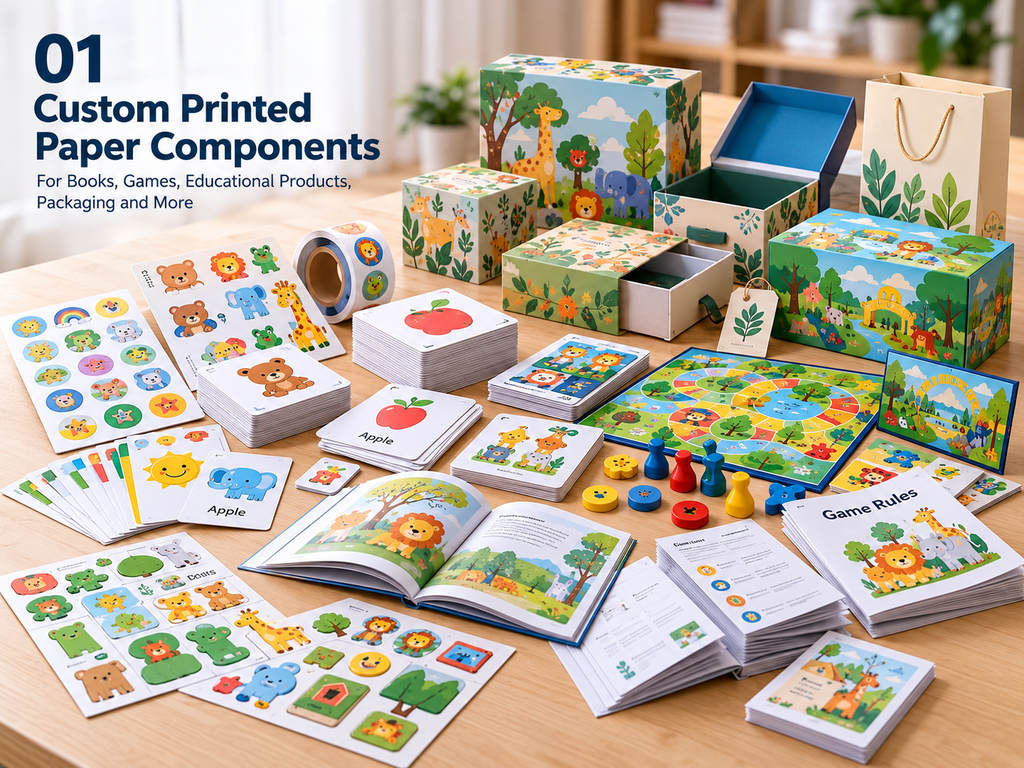
Explore QYC Print’s
Custom Printed Paper Components Manufacturing
page for paper-based component capabilities and project inquiries.
What Are Custom Printed Paper Components?
Custom printed paper components are individual paper or paperboard items designed to become part of a larger finished product.
They may serve different functions:
- Information: instruction manuals, care cards and printed inserts.
- Interaction: flash cards, playing cards and game boards.
- Activity: sticker sheets, die-cut pieces and printed worksheets.
- Presentation: boxes, paper sleeves, labels and hang tags.
- Organization: printed dividers, wraps and packaging inserts.
Instead of viewing these items as unrelated printing orders, product developers can plan them as a connected manufacturing project.
1. Start with the Complete Product, Not Just One Component
A common challenge in product development is preparing specifications for each component without considering how the parts will work together.
For example, a card deck may look attractive on its own, but its final dimensions, thickness and quantity must also be compatible with the packaging.
A printed activity booklet may need to fit inside a kit alongside cards, stickers and other materials.
Before requesting a quotation, define the complete product structure:
- What is the finished product?
- Who will use it?
- Which printed components are required?
- How will the components be assembled or packed?
- What quality and finishing requirements apply?
This approach helps identify potential production issues before manufacturing begins.
2. Common Components in Educational Product Kits
Educational products frequently combine different printed formats to create a more interactive learning experience.
Flash Cards and Learning Cards
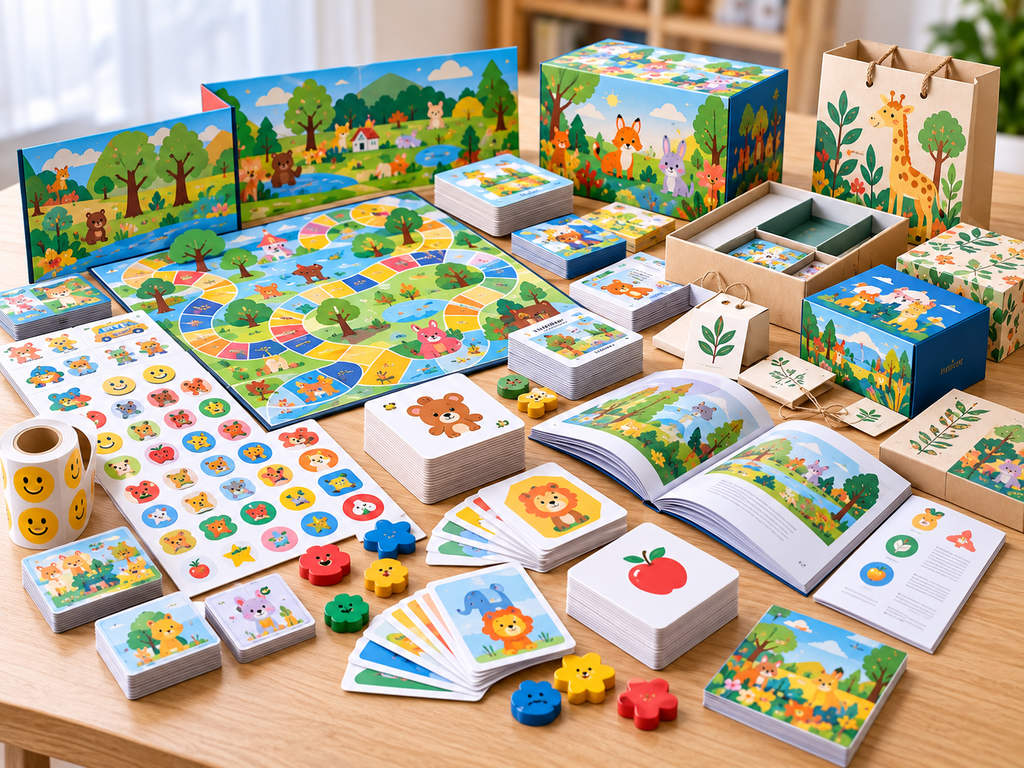
Flash cards can support vocabulary learning, early education, memory activities and interactive teaching materials.
Important specifications include card dimensions, paperboard thickness, corner shape, surface finish and packaging format.
Sticker Sheets and Activity Materials
Sticker sheets can add an interactive element to workbooks, activity books and learning kits. Die-cut shapes, adhesive materials and sheet layouts should be selected according to the intended use.
Booklets and Printed Instructions
Printed booklets can provide learning instructions, exercises, reference information or guidance for parents and teachers.
Binding style, page count, paper selection and finished size should be coordinated with the rest of the kit.
For related manufacturing capabilities, visit
Educational Products Manufacturing
and
Children’s Book Printing.
3. Printed Components for Board Games and Tabletop Products
Board games are another example of multi-component paper manufacturing.
Depending on the game design, a project may require:
- Playing cards and reference cards
- Folding game boards
- Printed player boards
- Punch-out cardboard tokens and tiles
- Rulebooks and score sheets
- Printed boxes and packaging inserts
Each component has different functional requirements. Cards may need frequent handling, while a folding board must open and close properly. Punch-out pieces require accurate cutting and suitable paperboard construction.
The manufacturing specifications should reflect these differences rather than applying the same materials and finishes to every item.
For non-paper components such as plastic miniatures, electronic devices or dice, sourcing and production feasibility should be confirmed separately.
4. Printed Packaging Is Part of the Product Experience
Packaging does more than hold a product. It also helps organize components, communicate information and present the product to the end user.
Printed paper packaging may include:
- Folding cartons and paperboard boxes
- Rigid paper-covered boxes
- Printed paper sleeves and wraps
- Instruction and promotional inserts
- Labels, tags and product cards
Packaging dimensions should be considered early in development, particularly when the product contains several items of different sizes.
For branded gifts, stationery sets and retail products, consistent printing and finishing across the components can also support a more unified presentation.
5. How to Prepare a Multi-Component Printing Specification
Clear specifications make it easier for a manufacturer to evaluate production feasibility and prepare a useful quotation.
| Specification | Information to Prepare |
|---|---|
| Product structure | List every printed component and its function. |
| Dimensions | Finished size and flat size where applicable. |
| Quantity | Order quantity and number of pieces per finished kit. |
| Materials | Preferred paper, paperboard or adhesive material. |
| Printing | Color requirements and artwork files. |
| Finishing | Lamination, die-cutting, folding, binding or other processes. |
| Packing | How components should be grouped and packed. |
| Delivery | Destination and target delivery requirements. |
If some specifications are not yet finalized, provide reference samples, product photographs or a draft component list. A manufacturing review can then identify the details that still need to be confirmed.
6. Why Coordinated Manufacturing Matters
Multi-product manufacturing is not simply about placing several printing orders at the same time.
It involves reviewing how the printed components relate to one another throughout the project.
Consistent Visual Presentation
Related components may share artwork, brand colors, illustration styles and finishing requirements. Reviewing these together can help maintain visual consistency.
Compatible Dimensions
Cards, booklets, inserts and packaging need to work together physically. Checking the component dimensions early helps reduce avoidable fitting problems.
Production Planning
Different components may require different manufacturing processes. Coordinating their specifications helps establish a realistic production sequence.
Quality and Packing Requirements
For a complete kit, the final packing requirements may be as important as the quality of an individual printed item.
Component counts, grouping methods and approved packing instructions should therefore be included in the project specifications.
7. Example: Building a Complete Printed Product Kit
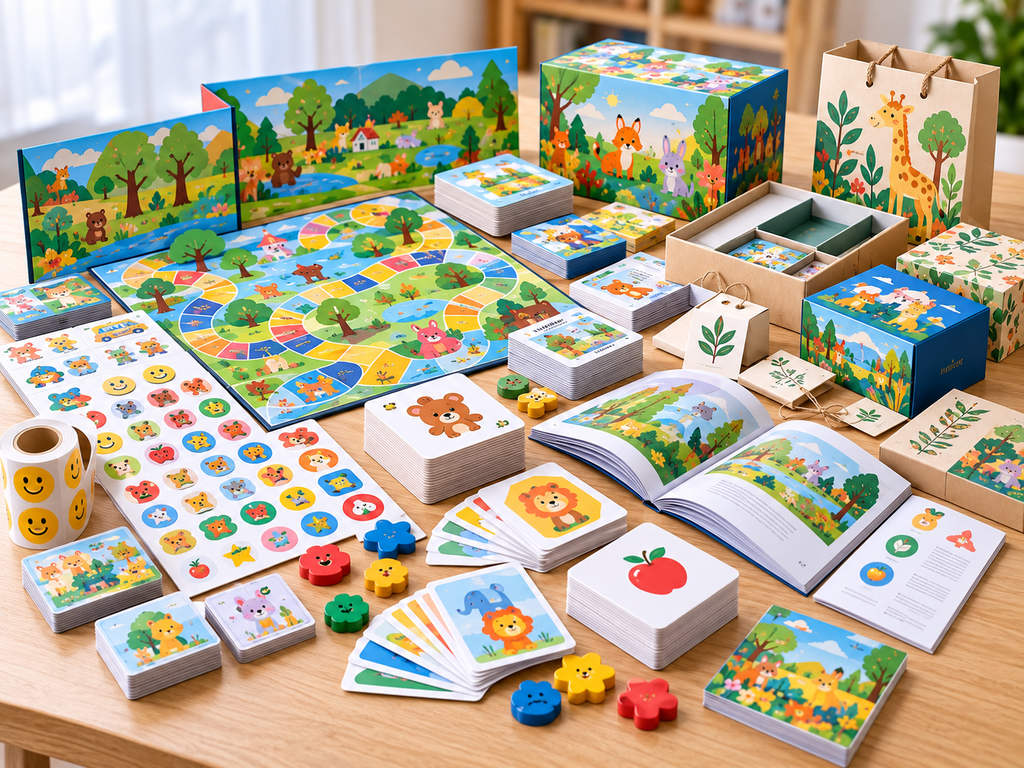
Consider a hypothetical children’s learning kit designed around animals and nature.
The kit could include:
- One illustrated activity booklet
- A set of educational flash cards
- Several sticker sheets
- A printed instruction card
- A custom paperboard box
The product developer would first establish the educational concept and intended user experience.
Next, the project would move into component design, material selection, printing specifications, finishing and packing requirements.
Once the components are approved, the manufacturer can review the appropriate production methods and the requirements for the complete kit.
This is an illustrative example rather than a claim about a specific completed customer order.
8. Choosing a Custom Printed Paper Components Manufacturer
When selecting a manufacturing partner, it is useful to evaluate more than the price of an individual card, booklet or box.
Consider the following questions:
- Can the manufacturer review the full component list?
- Which printing and finishing processes are handled in-house?
- Can the manufacturer evaluate materials and product construction?
- How will artwork and component specifications be checked?
- What sampling, quality and packing requirements must be agreed upon?
- Which parts require additional sourcing or technical confirmation?
A suitable manufacturing partner should understand the relationship between product design, component construction and practical production requirements.
9. Custom Printed Paper Components Manufacturing with QYC Print
QYC Print is a Guangzhou-based printing and packaging manufacturer with experience dating back to 1988.
With Heidelberg printing equipment and in-house post-press capabilities, QYC supports custom paper printing projects across books, educational materials, cards, printed components and packaging.
For multi-component projects, our focus is to review the complete printed product structure and assess suitable manufacturing processes based on the customer’s requirements.
Explore our dedicated
Custom Printed Paper Components Manufacturer
page to learn more about the types of printed parts that can be included in a coordinated project.
Frequently Asked Questions
What are custom printed paper components?
They are printed paper or paperboard items used as parts of a larger product, such as cards, stickers, game boards, booklets, labels and packaging.
Can multiple printed products be manufactured for one kit?
Yes. A manufacturer can evaluate multiple printed components as a coordinated project, subject to material, production and packing requirements.
What files are needed for a quotation?
A component list, sizes, quantities, artwork or references, material preferences, finishing requirements and delivery information are useful starting points.
Are paper components only used in board games?
No. They are also used in educational kits, children’s publishing, stationery, branded packaging, gift products and other physical product projects.
Conclusion
Custom printed paper components play an important role in turning ideas into complete physical products.
Whether you are developing a board game, an educational kit or a branded retail product, planning the components together can help align design, printing, finishing and packaging requirements.
Starting with the complete product structure is often the most practical way to prepare a successful manufacturing project.
Have a Multi-Component Printing Project?
Share your product concept, component list or artwork with QYC Print for a manufacturing review and custom quotation.
WhatsApp: +86 131 8908 1077
WeChat: a13189081077